A closer look
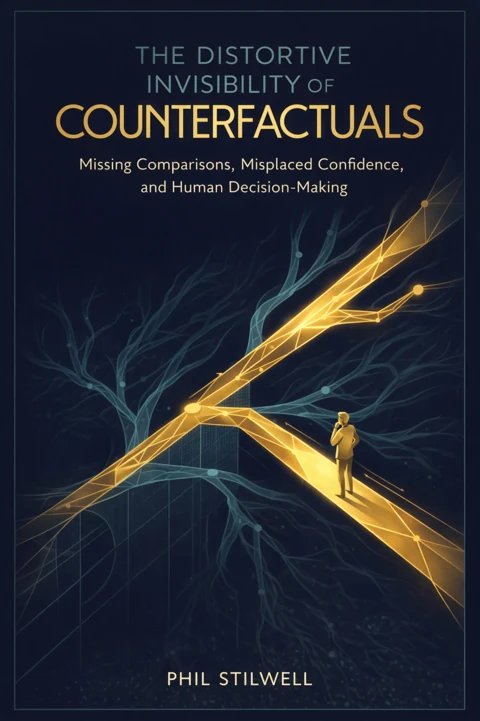
A town maintains a flood barrier, and its streets remain dry. Was the barrier essential, an unnecessary expense, or one reasonable option among several? The visible result cannot settle that question by itself. To evaluate the decision, residents need a credible account of what might have happened under different conditions. The missing comparison is the book’s starting point.
A counterfactual is an account of what would or might have happened if something had been different. We rely on such comparisons when judging a policy, a hire, an inherited belief, or a career choice. This book examines how their absence can inflate confidence, conceal costs and benefits, and leave people unable to learn what their decisions actually accomplished.
What the visible result leaves out
The early chapters distinguish a result from the explanation offered for it. Success does not establish that an action caused the success, that the action was necessary, or that no better option existed. Likewise, an unfortunate result does not by itself show that the original choice was unreasonable given the information available.
These distinctions make room for easily overlooked consequences: damage a precaution prevented, benefits an alternative could have produced, or opportunities lost while continuing a familiar course. The question becomes which comparison would support the particular judgment being made.
How missing comparisons become lasting confidence
Later chapters examine a reinforcing cycle. Confidence can narrow the alternatives people investigate; the resulting narrow evidence can then appear to confirm that confidence. Organizations face an additional problem when they fail to preserve rejected options, earlier expectations, or the reasons behind a decision. Capable individuals can inherit an incomplete record.
Everyday thought experiments, historical cases, and research discussions connect this problem to individual and collective judgment. The book separates distorted beliefs, poorer choices, and missed opportunities to learn, showing why better information sometimes depends on how decisions are organized in the first place.
A practical discipline with limits
The closing method asks you to specify the judgment, identify relevant alternatives, examine the evidence, and test the assumptions that could change the choice. A worked worksheet makes that process concrete. Recording expectations before the outcome helps preserve what was uncertain, while staged commitments can leave room for further learning.
The book also challenges seductive alternatives. An imagined career with every disappointment removed is an unfair comparison with a life actually lived. Further inquiry has costs, and no method produces complete certainty. The aim is to make a defensible choice with confidence proportionate to the comparisons the evidence can support.
Ready to turn the page?
Find this book on Amazon