A closer look
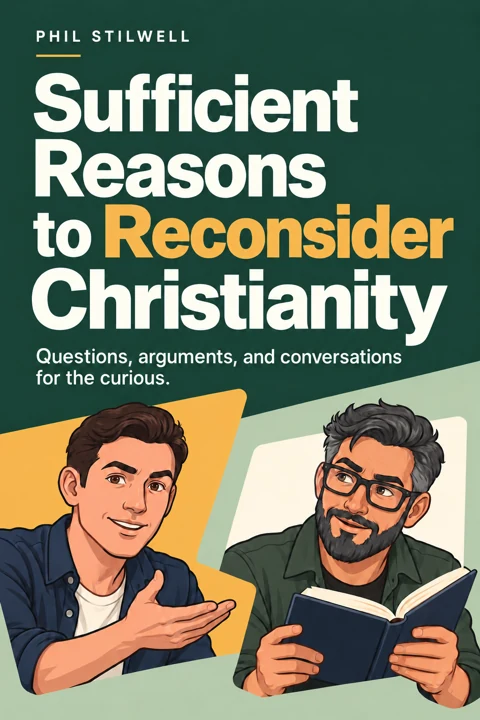
Sufficient Reasons to Reconsider Christianity invites readers to investigate beliefs that may be closely bound to family, identity, and purpose. Phil Stilwell introduces the inquiry through his own experience of committed Christianity and eventual departure, while explicitly separating that personal history from evidence that could establish whether a religious claim is true. A moving story can prompt a question; it cannot settle the question for everyone.
The book’s guiding standard is that the strength of belief should match the strength of the relevant evidence. That leaves room for tentative judgments, partial confidence, and revision. Readers are not asked to adopt a new identity before beginning. They are asked to notice what supports their present convictions and what would count as a reason to reconsider them.
Fifty-two questions with room for replies
The chapters move from the right to question religious authority to the clarity of scripture, unanswered prayer, prophecy, spiritual experience, and the influence of inherited belief. Later discussions address guilt, salvation, eternal punishment, sacrificial forgiveness, moral disagreement, the resurrection, and claims about Jesus. Questions about meaning and compassion beyond Christianity give the inquiry a practical dimension.
The range is broad, but each chapter gives a specific claim sustained attention. An objection to one description of God is kept distinct from an objection to every possible deity. A logical contradiction, missing evidence, and an unresolved question are treated as different problems requiring different conclusions.
Making the reasoning concrete
Everyday examples bring difficult issues within reach. A supposed king requests allegiance before establishing his credentials; familiar situations expose the difference between explaining an outcome and supplying an excuse for it. The examples encourage readers to apply standards they already use outside religious discussions.
Imagined exchanges between Chris, a Christian defender, and Clarus, a persistent questioner, bring objections and replies into conversation. Prompts invite readers to formulate their own responses and identify evidence that could alter their confidence. The author also asks readers to scrutinize his reasoning and give serious Christian defenses a fair hearing.
Who this inquiry is for
Questioning believers may find a way to articulate concerns that are difficult to raise in familiar settings. Former Christians can revisit arguments without treating departure itself as proof. Readers interested in how convictions are formed and protected can examine a substantial religious example of a more general problem: how belonging, emotion, and the wish for an answer can influence what feels convincing.
The book openly takes a skeptical position. When it examines claims of divine love or justice, it tests whether the Christian account fits its own stated standards rather than assuming an independent moral law. Its broader invitation is to keep conclusions answerable to reasons, including when those conclusions carry personal consequences.
Ready to turn the page?
Find this book on Amazon